



Thoracic osteochondrosis is a degenerative disease characterized by dissection of the intervertebral discs, compression of the intercostal nerves, intense pain, poor posture, etc.
The insidiousness of the disease lies in the fact that the symptoms of osteochondrosis do not appear immediately, but only after some time (after months and even years), therefore the pathology is diagnosed, as a rule, already at an advanced stage.
Why does thoracic osteochondrosis develop and what treatment methods exist?How to get rid of pain and what to do in case of exacerbation?What complications may arise if the disease runs its course, and what would a famous doctor advise in such a situation?
What kind of disease is this and why is it dangerous?
Thoracic osteochondrosis is dangerous because it is often confused with other pathologies (for example, with diseases of the cardiovascular system or with intercostal neuralgia) and therefore incorrect diagnoses are made.Another danger is that the disease is practically undetectable at an early stage.
The pain is vague, so only a doctor can make an accurate diagnosis.
Signs

Osteochondrosis of the thoracic region is characterized by the following symptoms:
- Pain in the chest area (may be sharp or tight).
- Dull pain in the shoulder blade region.
- Numbness of the limbs (for no apparent reason) and freezing.
- Headache and dizziness.
- Feeling of chronic fatigue.
- Nausea and heartburn.
- Violation of the functions of the gastrointestinal tract.
Symptoms of the disease are more pronounced in women than in men.
Dorsalgia and back pain
- back painis a mild, long-lasting pain syndrome in the area of damaged intervertebral discs.An attack is characterized by a gradual onset followed by an increase in pain.
This condition can last from several days to several weeks.In this case, the pain intensifies at night and subsides in the morning.The symptoms of back pain can resemble pneumonia, the only difference being the absence of cough and high fever.
- DorsagoUnlike back pain, it is characterized by an attack of sharp “dagger” pain in the thoracic and interscapular region of the spine.An attack occurs after physical fatigue or prolonged exposure to an uncomfortable position.In this case, the patient has severe shortness of breath.
Difficulty breathing
Difficulty breathing is one of the typical signs of an acute degenerative process in chondrosis of the thoracic spine.
This is due to the fact that the root nerves responsible for the functioning of the respiratory system are located in this area.Shortness of breath is felt especially when carrying out any physical activity (for example, when climbing stairs).
Causes

This disease never develops alone;is preceded by several factors.Here are some of them:
- Sedentary lifestyle.
- Various back and spinal injuries.
- Lack of vitamins and minerals in the body.
- Curvature of the spine.
- Pregnancy (as the load on the spine increases).
- Wear high-heeled shoes (especially if you have flat feet).
- Frequent stress.
- Bad habits.
- Severe hypothermia of the body.
- Intervertebral hernias, etc.
The hereditary factor also plays an important role in this.
How long does it take to develop?
Thoracic osteochondrosis develops slowly.Sometimes this process takes months or even years.But the first symptoms appear in the second stage of the disease and, if appropriate measures are not taken, the pathology will begin to progress until it leads to complete destruction of the discs with subsequent disability.
Diagnosis
Diagnosis of thoracic osteochondrosis begins with collecting an anamnesis.The next stage of the study is examination of the patient and palpation of the affected area.Then the patient is referred for diagnostic procedures such as:
- Blood test (allows you to detect the presence of an inflammatory process in the body).
- Ultrasound.
- Chest x-ray in two projections.
- ECG (to identify cardiovascular pathologies, often confused with osteochondrosis).
- Magnetic resonance imaging (detects the presence of intervertebral hernias).
And based on the results of studies, the patient is prescribed appropriate treatment.
Which doctor should I contact?
Who treats this disease?If you suspect thoracic osteochondrosis, you should contact a therapist (if necessary, he will refer you to a highly specialized doctor) or directly to a neurologist.
Degrees

Experts distinguish the following degrees of development of osteochondrosis of the thoracic region::
- First degree— there are no pronounced symptoms of the disease, the intervertebral discs become less elastic.
- Second degree- the intervertebral discs lose their previous elasticity, the person feels slight pain in the chest area and general malaise.
- Third degree- the pain intensifies and requires drug treatment.A hernia begins to form.
- Fourth degree- the intervertebral discs completely lose their elasticity, the bone tissue of the vertebrae is destroyed, the person feels sharp pain, suffers from shortness of breath and cannot do without medication.
Detection of the pathology at an early stage almost always has a positive result, while the disease in its advanced form is mostly incurable.
How to cure?
Typically, a comprehensive treatment regimen is used, including the use of medications, physiotherapy, massage, exercise therapy, etc.Along with the main treatment, patients can use time-tested folk remedies (and always after consultation with the doctor).
Is it possible to provide first aid in case of a spasm?
In case of crisis, it is recommended to call an ambulance, but even before the doctor arrives, you can try to alleviate the condition yourself.To do this you need:
- Carefully place the patient on the bed.
- Lubricate the affected area with anti-inflammatory ointment.
- Give the victim an anesthetic (pills).
- Apply a cold compress to the painful area (for example, dampen a towel with cold water and place it over the affected area's clothing).
These measures will help relieve pain for a while.
Drug therapy
Drug therapy is one of the most effective treatment methods, along with physiotherapy and massage.
The most effective medicines
As therapy, patients receive ointments and injections(under specialist supervision, as self-medication can only worsen the condition).
Ointments

For the treatment of osteochondrosis and pain relief, the following types of ointments are recommended:
- Nonsteroidal anti-inflammatory drugs- relieve pain and inflammation, used in the early stages of the disease.
- Chondroprotectors— used as part of complex therapy, enhancing the effect of tablets.
- Medicines that improve blood circulation— due to the normalization of blood flow, pain and swelling are reduced.
- Herbal products— contain natural ingredients, used in complex therapies.
- Products with irritating ingredients- increase blood flow, which subsequently leads to pain relief.
Before using this or that product, you should consult your doctor and read the instructions for the medicine.The doctor will select a safe dosage and prescribe a treatment.
Injections
Injections are usually prescribed during an exacerbation or in the first days of treating the disease, followed by a transition to oral drug therapy.Yes,The following injectable medications are most effective:
- Analgesics for blockage- administered once in case of acute pain.
- Analgesics against severe pain during exacerbation- eliminate pain, administered intramuscularly 2-3 times a day.
- Nonsteroidal anti-inflammatory drugs- relieve inflammation and pain.
- Chondroprotectors- promote the regeneration of intervertebral discs.
- Muscle relaxants- relax the muscles in the thoracic region and relieve spasms.
- B vitamins- normalize metabolism in joints, participate in the restoration of nerve fibers, improve cellular nutrition in muscle, bone and cartilaginous tissues.
Among all of the above medications, only chondroprotectors are prescribed for a long term - up to 3 months, other medications are used in the first days of an exacerbation (until the condition improves).
Non-drug methods
AlsoNon-drug therapy methods are used as part of complex treatment(physiotherapy, etc.).
Physiotherapy
Physiotherapy includes various procedures (electrophoresis, magnetic therapy, ultrasound, etc.) and treatment with a special device.
Procedures
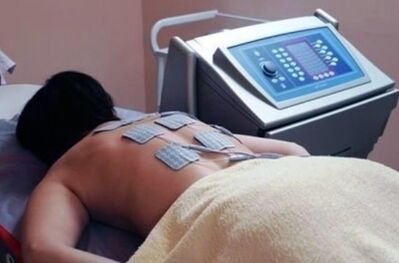
The following procedures are prescribed to patients as physiotherapy::
- Electrophoresis- exposure to certain areas of the skin through direct electrical current.
- Magnetotherapy- exposure to a magnetic field in the affected area.
- Ultrasound Therapy— micromassage in the form of ultrasonic vibrations on a specific area.
- laser therapy— activation of bioelectric processes in nervous tissues using gel-neon lasers.
Along with this, natural types of physiotherapy are prescribed:
- hydrotherapy (water treatment);
- thermotherapy (exposure to cold and heat);
- mud therapy, etc.
Vibroacoustic device
The use of this device is considered an innovative treatment method (including for the treatment of intervertebral hernias).A vibroacoustic device compensates for microvibrations in the body's tissues.
Using the device establishes the following processes:
- Reduces swelling.
- Helps remove toxins from tissues.
- Improves blood flow and saturates cells with oxygen.
- Accelerates the regeneration of affected tissues.
- Eliminates painful sensations (but not immediately, but after several sessions or the entire course of therapy).
The device can only be used after consultation with the attending physician.
Massage and manual therapy
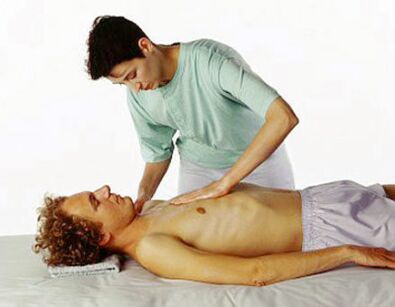
Massage is recommended as a preventive measure (at least 2 courses per year) or during periods of exacerbation.Therapeutic massage improves back muscle tone, reduces pain and spasms.But to avoid complications, the treatment must be entrusted to a professional.
Yes,There are the following types of therapeutic massage::
- Classic- rubbing, pinching, caressing, etc.
- Location- impact on acupuncture and pain points.
- Canned goods- vacuum effect on the affected area.
Manual therapy also affects the spine through massage.At the same time, the patient's blood circulation in the thoracic spine improves and the chiropractor tries to eliminate the causes of the development of osteochondrosis.This allows not only to alleviate a person's condition, but also to reduce the frequency of exacerbations.
Exercise therapy
One of the complex treatment methods is physiotherapy.Regular physical exercise strengthens the back muscles, improves spinal flexibility and also helps prevent exacerbations and possible complications.
Simple exercises for home
You can start physiotherapy only after prior agreement with your doctor.
Here are some effective exercises:
- Take a long towel and wrap it around your chest, holding the ends with your hands.After taking a deep breath and exhaling, squeeze the towel.
- Stand upright, place your hands behind your head and in this position lean to the right and left (8 turns in one direction and 8 in the other).
- Sit in a chair and lean against the back, then lean back until you feel a stretch in your chest area.In this position, lean forward (your chin should be straight).
If you feel unpleasant painful sensations or dizziness during exercise, the load should be reduced.(or stop exercising completely) and see a doctor.
Loading
There are several simple but very effective exercises that can be performed regularly while exercising.
Lying down
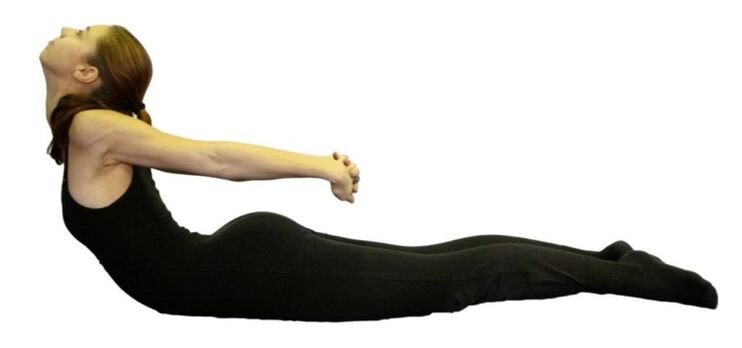
Progress:
- Lie on your stomach and extend your arms forward (so that the posture resembles the letter “Y”).
- Raise your arms fully without lifting your shoulders off the floor.
- Try holding this position for 10 to 60 seconds.
With roller
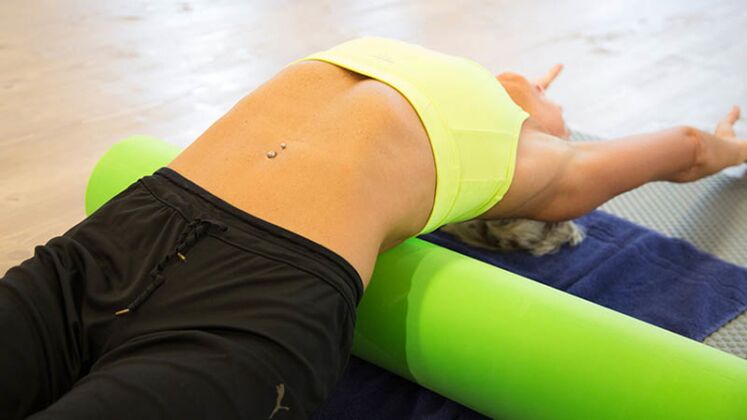
Progress:
- Place an elastic cushion on the floor and lie on your back, placing your feet on the floor.In this case, you need to put your hands behind your neck.
- Hold the pose for 30 seconds and then roll the roller back and forth for a few minutes.
Correct posture is also important for maintaining the health of the thoracic spine.
With a stick in the back

Exercises with a stick aim to strengthen and develop the back muscles, as well as helping to improve blood circulation.Below is an example set of exercises:
- Raise the stick, lower it in front of you and place it behind your head, lowering it to the level of your lower back.The distance between your hands on the stick should be as wide as possible.
- Move your straight arm with the stick first in one direction and then in the other.
- Raise the stick behind your back, spread your arms as far away from your body as possible and lean forward.
In this case, the exercises must be performed smoothly, without sudden movements.
Folk remedies
As a complement to the main treatment, folk remedies can be used.Here are the most effective recipes:
- Radish juice compress- the resulting juice is mixed in equal parts with grated garlic and horseradish gruel, applied to a thick cloth and applied in the form of a compress to the sore spot overnight.
- Lilac flower dye— fill a dark glass container (1 liter is enough) with lilac flowers, fill with vodka and store in a closed jar for 3 weeks.The resulting product is used externally to rub the sore spot.
- Potato compress- Mash 5 peeled and boiled potatoes until they obtain a puree consistency and place on several layers of gauze.Apply the finished compress to the painful area and wrap yourself in a warm blanket.It is recommended to store the product until it cools completely.
To achieve positive changes, procedures must be done every day (until the pain is completely eliminated) or every other day.
Complications and consequences

The development of complications is possible if the disease progresses.Thus, advanced thoracic osteochondrosis can lead to the following consequences:
- development of intervertebral hernia,
- inflammation of the nerve roots,
- vegetative-vascular dystonia,
- proliferation of bone osteophytes,
- narrowing of the spinal canal, etc.
The severity of complications depends on the rate of disease progression and the effectiveness of treatment.
What will happen if it is not treated?
If you let the disease take its course, thoracic osteochondrosis will begin to progress rapidly, passing from one stage to another (until it leads to complete destruction of the bone tissue of the vertebrae with subsequent disability).
What to do in case of an exacerbation?
An exacerbation is characterized by sharp back pain and limited movement.You can alleviate an attack with the help of medication (drinking an NSAID tablet, lubricating the affected area with anti-inflammatory ointment) or massage.
How to get rid of chest pain in front and other unpleasant sensations?
To get rid of chest pain in the front and other unpleasant sensations in the chest, you need to take an NSAID tablet.If the medicine does not work within 1 to 2 hours, it is recommended to see a doctor or call an ambulance.
Prognosis and prevention
The prognosis of the disease depends on the degree of damage to the spine.But it is impossible to completely cure pathology in stages 2-4.Therapy will only help relieve inflammation and stop the progression of osteochondrosis.And with the right approach, the remission stage is reached, which is supported by preventive methods.
Therefore, as a preventive measure it is recommended:
- Lead a healthy lifestyle (giving up bad habits, doing therapeutic exercises, etc.).
- Eat well (minimum of salty, fatty, spicy and sweet foods, more natural - cereals, fruits, vegetables, herbs, etc.).
- Avoid excessive physical activity.
- Get rid of excess weight.
- Avoid staying in the same position for a long time.
- Once every six months (or a year), be examined at a medical institution.
These measures will help keep your spine healthy and flexible for longer.
Expert advice for people with this diagnosis
For osteochondrosis of the thoracic spine, experts recommend adhering to the following rules:
- Avoid very soft furniture (so that the weight of your body does not put pressure on your spine).
- If you have to sit for a long time, you need to change the position of your legs every 15-20 minutes and perform simple exercises.
- Do not carry heavy loads with one hand (especially over long distances).
- A small pillow should be placed under the lower abdomen (if the patient prefers to sleep on his stomach).
- Get rid of bad habits and gradually reduce body weight (if any).
A person can obtain more detailed recommendations by contacting a doctor.
Recommendations from a famous doctor: physical education and muscles
Patients are interested in knowing how long it takes to treat this disease.The famous doctor warns patients in advance that the process will not be quick.Therefore, to make real progress,must be carried out regularly for 3 months specially selected set of exercises.
Therefore, the doctor recommends that patients perform the following exercises (for example, as morning exercises):
- Alternately lean your body to the left and right while raising one arm or the other.
- Get on all fours and arch your chest like a cat.
- Lie on your back and slowly raise your arms and then your head.
Repeat each exercise 5-7 times.This will strengthen your back muscles and reduce pain.
Thoracic osteochondrosis is a serious disease that gets younger and younger every year.Therefore, at the first suspicion of pathology, it is necessary to urgently consult a neurologist or therapist and undergo an examination.
In the futureIt is recommended to follow all doctor's instructions and adhere to an integrated approach to treatment, including not only drug therapy, but also physiotherapy and massage.This will create all conditions for the restoration of damaged vertebrae and relieve attacks of acute pain.